Mostrando entradas con la etiqueta natural science. Mostrar todas las entradas

martes, 6 de junio de 2017

NATURAL SCIENCE UNIT 7: MATERIALS AND MACHINES


CONTENIDOS:

-Algunos de los principales materiales de los que están hechos los objetos que nos rodean: plástico, metal, vidrio, tela, goma, madera...
-Propiedades de los materiales: duro/blando, elástico, flexible, transparente/opaco...
-Máquinas que utilizamos a diario: televisión, teléfono móvil, frigorífico, coche...
-Materiales de los que están hechas estas máquinas.
-Inventos importantes que cambiaron las vidas de las personas: la rueda y la radio.

CRITERIOS DE EVALUACIÓN:

-Nombra e identifica los materiales básicos de fabricación de objetos y máquinas: plástico, papel, tela, metal, vidrio, goma...
-Clasifica algunos materiales según sus características principales.
-Nombra y asocia a su grafía algunas máquinas de uso diario en casa y en el colegio.
-Agrupa las máquinas trabajadas de acuerdo con los materiales que las componen.
-Conoce dos de los inventos fundamentales en la historia del ser humano.

VOCABULARIO:

Fabric
Glass
Rubber
Wool
Porcelain
Wood
Plastic
Metal
Hard
Soft
Elastic
Flexible
Transparent
Opaque
TV
Computer
Mobile phone
Digital board
Car
Fridge
Microwave oven
Hob
Toaster
Wheel
Radio


MATERIALS

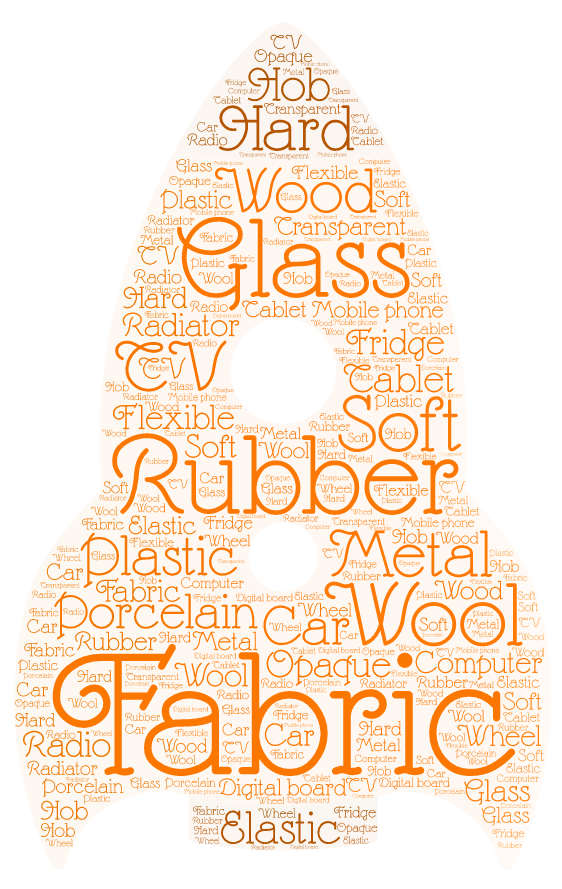
These are some of the materials we use the most:

Fabric


Glass


Rubber


Wool


Porcelain


Wood


Plastic


Metal


Materials have different properties.


  • They can be soft, like wool. They can be hard, like wood or metal.
  • They can be flexible. It means they bend without breaking, like fabric and wool.
  • They can be elastic, like rubber. They stretch.
  • They can be transparent, like glass, because we can see through it. If they aren't transparent, they are opaque.

MACHINES

Machines are also made of materials. For example, a computer is made of plastic, metal and glass. A car is made of metal, glass, fabric and even rubber!

These are some machines that you might have at home. Do you know their names?


What materials are they made of?


Some other machines that we use everyday are:


viernes, 28 de abril de 2017

NATURAL SCIENCE UNIT 6: MOVEMENT


Contenidos:

-El sistema locomotor: partes que lo componen y funciones principales.
-El esqueleto: huesos principales.
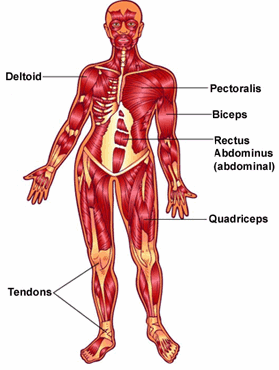
-Los músculos: algunos importantes.
-Las articulaciones principales. 
-Hábitos de cuidado del sistema locomotor y prevención de accidentes.

Criterios de evaluación:

-Conoce los distintos aparatos que forman parte del sistema locomotor.
-Explica las funciones del sistema locomotor.
-Nombra los principales huesos, músculos y articulaciones y los localiza en su cuerpo.
-Comprende la necesidad de adoptar hábitos saludables.

Vocabulary:

Locomotor system
Movement
Skeleton
Bone
Muscle
Joint
Healthy habits
Hard
Soft
Elastic
Tough 
Bending


Our locomotor system helps us move. It allows us to dance, run and play football! It is composed by the skeleton, the muscles and joints.

Skeleton and bones


Bones are hard. They support our bodies and protect the organs. For instance, our skull protects our brain from being damaged.  


Muscles


Muscles are soft, but elastic and tough. They help our skeletons move.


Joints

Joints are the parts of the body where two bones meet. They allow us to bend.


We must take care of our locomotor system. 


lunes, 20 de febrero de 2017

NATURAL SCIENCE UNIT 5: THE VITAL FUNCTIONS


CONTENIDOS:

-Los cinco sentidos: nombre y relación con su órgano correspondiente
-Función e importancia de cada uno de los sentidos
-Nutrición: el ser humano como animal omnívoro
-Órganos principales de la nutrición
-Interacción en el ser humano: sentidos y movimiento
-Reproducción: el ser humano como animal vivíparo
-La dieta saludable: alimentos buenos para el cuerpo humano y cantidades adecuadas

CRITERIOS DE EVALUACIÓN:

-Asocia los cinco sentidos con sus órganos correspondientes.
-Nombra los sentidos y los órganos trabajados.
-Señala la importancia de los cinco sentidos para nuestra vida.
-Comprende el concepto de nutrición y explica la dieta humana.
-Identifica algunos órganos que intervienen en la digestión.
-Comprende el concepto de interacción.
-Comprende el concepto de reproducción, así como nociones básicas de la reproducción en el ser humano.
-Reconoce y diseña menús saludables.

VOCABULARIO:

Five senses
Sight
Hearing
Smell
Touch
Taste
Eyes
Mouth
Ears
Nose
Skin
Omnivores
Viviparous
Esophagus
Stomach
Intestines
Anus
Healthy
Nutrition
Interaction
Reproduction


There are five senses -hearing, sight, smell, touch and taste. 


These senses works through the sense organs:


  1. Hearing: ears
  2. Sight: eyes
  3. Smell: nose
  4. Touch: skin
  5. Taste: mouth


There are 3 VITAL FUNCTIONS to all living things:


Nutrition is the process by which our bodies transform the food into nutrients. Animals can be carnivores, omnivores or herbivores. 

Humans are omnivores: we can eat both plants and meat! 


These are some of the organs that take part in nutrition:


Interaction allows us to relate to our environment. We use the five senses, do you remember? 

We can see, hear, smell, touch and taste, 

We also move. To move, we use our bones and muscles.


Reproduction allows us to create new human beings. Human beings are viviparous: they don't lay eggs! Mothers give birth to babies. 


Babies live in their mothers' wombs for 9 months until they are born. 


Now some games:


Unit mind map:

sábado, 21 de enero de 2017

NATURAL SCIENCE UNIT 4: PLANT REPRODUCTION


CONTENIDOS:


  1. Las partes de la flor: localización y funciones principales. 
  2. El proceso reproductivo de las plantas: creación de la semilla. 
  3. Importancia de las plantas para la vida en la Tierra. 
  4. Plantas con flor y plantas sin flor: diferencias y ejemplos.


CRITERIOS DE EVALUACIÓN:


  1. Las partes de la flor: localización y funciones principales. 
  2. El proceso reproductivo de las plantas: creación de la semilla. 
  3. Importancia de las plantas para la vida en la Tierra. 
  4. Plantas con flor y plantas sin flor: diferencias y ejemplos.


VOCABULARY:

Flower: flor
Stamen: estambre
Pistil: pistilo
Petals: pétalos
Sepals: sépalos
Seed: semilla
Reproduction: reproducción
Flowering plants: plantas con flor
Non-flowering plants: plantas sin flor
Apple tree: manzano
Almond tree: almendro
Pine tree: pino
Moss: musgo


Plants are living things. As all living things, they reproduce: this means they make new plants.


Stamens are the male parts of the flower. They produce pollen.

The pistil is the female part. It's like a bottle.

Petals are coloured leaves.

Sepals are green leaves that protect the flower.


Plant reproduction has four stages:


  1. The pollen is formed.
  2. Pollen reaches the pistil.
  3. The pistil becomes a fruit that contains seeds.
  4. The seeds become new plants.


Not all plants have flowers. There are flowering plants and non-flowering plants.

Flowering plants include apple trees and almond trees. Non flowering plants include moss and pine trees. 


Plants are very important.


Great job!

Now some games:


domingo, 20 de noviembre de 2016

NATURAL SCIENCE UNIT 3: PLANTS

In this Unit, we'll learn more about plants!


Plants, just like animals, are living things. It means they can be born, grow, reproduce and die.


Are these living things? (Select to find out the answers!)

 NO!
 
 YES!
 
 NO!
 
 YES!

Let's now learn about the parts of a plant!


Plants need five things to grow: WATER, SOIL, SPACE, SUNLIGHT and AIR.


domingo, 6 de noviembre de 2016

NATURAL SCIENCE UNIT 2: ECOSYSTEMS


Animals can be carnivores, herbivores or omnivores.

Carnivores eat other animals: LIONS, WOLVES and TIGERS are carnivores!

Herbivores eat plants: RABBITS, HORSES and SHEEP are herbivores!

Omnivores eat plants and animals: PIGS, MONKEYS and HUMANS are omnivores!


Ecosystems are groups of living things that interact with one another!


What plants and animals can you find in San Martín? What do they eat?


Games:

Animal diet: http://www.sheppardsoftware.com/content/animals/kidscorner/games/animaldietgame.htm
http://www.esolhelp.com/carnivore-herbivore-omnivore.html
Food chains:
https://www.sheppardsoftware.com/content/animals/kidscorner/games/foodchaingame.htm